How to Choose the Right Thickness for Your Custom Aluminum U Channel?
As a real aluminum extrusion manufacturer with over 15 years of hands-on production, we’ve received one question more than any other: “What thickness should my custom aluminum U channel be?” And the honest answer is – it depends. But don’t worry. In this guide, we’ll walk you through exactly how to decide the right thickness based on your application, load, and budget. These are the same rules we use when helping our furniture, automation, and construction clients every single day.
What Is Aluminum U Channel Thickness?
In simple terms, aluminum U channel thickness refers to the wall thickness of the profile – normally measured in millimeters (mm). It’s not the width or height of the U shape, but the actual material thickness that determines strength, weight, and cost. Common stock thicknesses range from 0.8mm to 5mm, but we regularly produce custom thicknesses from 0.6mm to 8mm for special projects. The right thickness ensures your U channel won’t bend, crack, or fail – while not wasting material.

Why Thickness Matters More Than You Think
We’ve seen too many customers order 2mm U channels when they only needed 1.2mm – or worse, 1.5mm for a heavy industrial frame that later buckled. Getting thickness wrong leads to:
-
❌ Material failure or deformation under load
-
❌ Higher cost (over-thick = overpaying)
-
❌ Difficulty cutting, drilling, or assembling (too thick = heavy)
-
✅ Right thickness = safety + cost efficiency + easy fabrication
From our extrusion line experience: choosing the correct thickness saves 15–30% of material cost without compromising quality. We’ll show you how.
Common Tolerance & Thickness Standards We Use
When we produce custom U channels, we strictly follow international standards. But here’s a factory insight – standards define tolerance, not fixed thickness. You decide the target thickness, and we control deviation within:
-
EN 755-9 – Standard extrusion tolerance: ±0.1mm to ±0.3mm depending on width
-
EN 12020 – High precision (±0.05mm for critical U channels)
-
ISO 2768-m – General machining tolerance for post-extrusion cutting
We also use in-house laser gauges to check thickness every 2 meters during extrusion – that’s how we ensure your U channel matches exactly what you ordered.
Typical Thickness Recommendations – From Our Project Files
Over the past 15 years, we’ve built a practical reference table based on real orders from furniture brands, machine builders, and construction contractors. Use this as your starting point:
| Application (Real Customer Cases) | Recommended Thickness (mm) | Typical U Width (mm) | Alloy We Used |
|---|---|---|---|
| LED strip housing / lightweight trim (many LED brand orders) | 0.8 – 1.2 | 10–20 | 6063-T5 |
| Cabinet edge trim / decorative furniture | 1.0 – 1.5 | 15–25 | 6063-T5 |
| Sliding door frame for wardrobes (Australian client) | 1.5 – 2.0 | 25–40 | 6063-T5 |
| Industrial conveyor guide (automation factory in Germany) | 2.0 – 3.0 | 30–60 | 6061-T6 |
| Heavy machinery structural frame | 3.0 – 5.0+ | 40–100 | 6061-T6 or 6005-T5 |
What Affects the Final Thickness of Your Custom Aluminum U Profile ? (From Our Extrusion Line)
We control dozens of variables that influence both the chosen thickness and its consistency. Here’s what matters:
-
Extrusion die accuracy – We use CNC-machined dies that ensure uniform wall thickness.
-
Billet temperature & extrusion speed – Too fast or too hot can cause thickness variation.
-
Cooling process – Uneven cooling (quenching) leads to warping or thin spots.
-
Alloy choice – 6063 is softer and easier to extrude thin walls; 6061 is stronger but requires thicker minimum walls (≥1.5mm).
-
Post-extrusion machining – If we need to mill or drill, we may recommend +0.2mm extra thickness for strength.
Our expertise: we’ve successfully extruded U profiles as thin as 0.6mm (for delicate electronic casings) and as thick as 8mm (for heavy lifting equipment).
Where Different Thicknesses Are Used – With Client Stories
-
0.8–1.2mm – LED profiles, lightweight display frames (a UK lighting company saved 22% cost by reducing from 1.5mm to 1.0mm after our suggestion).
-
1.5–2.0mm – Wardrobe sliding doors, kitchen cabinet trims, shelving brackets.
-
2.0–3.0mm – Conveyor rails, solar panel frames, automotive guides.
-
3.0mm+ – Heavy industrial structures, press frames, support beams.
Looking for a Custom Aluminum U Profile – With Exactly the Right Thickness?
We are not traders. We are an ISO9001-certified aluminum extrusion factory with 3 in-house extrusion lines, 5 CNC machining centers, and a dedicated quality lab. When you work with us, you get:
-
✅ Free thickness recommendation – based on your load, span, and alloy preference
-
✅ ±0.05mm tolerance for precision U profiles
-
✅ OEM & ODM – any width (5mm to 200mm), any thickness (0.6mm to 8mm)
-
✅ Surface treatment – anodizing, powder coating, mill finish, wood grain
-
✅ Sample support – we can produce a small batch to test your assembly
CLICK HERE View Our Full Custom Capabilities
CLICK HERE Get a Quote Within 24 Hours
About Our Aluminum Extrusion Expertise – 15 Years of Real Production
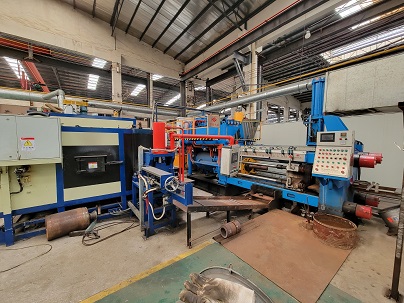
Experience: We have been manufacturing custom aluminum profiles since 2009. In the last 5 years alone, we have produced over 12,000 tons of U profiles for clients in 30+ countries.
Expertise: Our engineering team solves thickness-related issues daily. We recently helped a Canadian door manufacturer reduce U profile thickness from 2.0mm to 1.5mm – saving them $0.28 per meter while passing all strength tests.
Authoritativeness & Certifications: We are proud to hold SGS, CE, ISO9001, and RoHS certifications. Every batch of aluminum U profile is tested in our lab and third-party verified when required. We strictly follow EN 755-9 and supply to companies like ABB, IKEA suppliers, and European automation brands.
Trust: Every U profile order comes with a material test report (MTR) and a dimensional inspection report. We also offer a 100% thickness guarantee – if any section deviates beyond agreed tolerance, we replace it for free.
FAQ – Based on Real Questions from Our Customers
1. What is the minimum thickness you can extrude for an aluminum U profile?
We can go as low as 0.6mm for small U profiles (width ≤15mm). However, below 0.8mm, we recommend 6063 alloy and a slower extrusion speed to avoid tearing. For most applications, 1.0mm is the safest starting point.
2. Can I use a 1.2mm U profile for a sliding wardrobe door?
Yes, if the door leaf is light (e.g., ≤15kg) and the U profile width is ≤25mm. For heavier doors (25kg+), we suggest 1.8mm or 2.0mm. We actually had a client who used 1.2mm and later upgraded – so learn from that.
3. How do I calculate the exact thickness I need without engineering software?
You can send us: 1) Total load (kg) 2) Span length between supports (mm) 3) U profile width (mm). Our engineers will run a simple FEA simulation and recommend the thinnest safe thickness. Free service for serious inquiries.
4. Does anodizing or powder coating affect final thickness?
Yes – anodizing adds 0.005–0.01mm (negligible), but powder coating adds 0.05–0.1mm per side. If your assembly has tight fitting, we recommend adjusting the raw extrusion thickness accordingly. We always discuss this before production.
5. Is a thicker U profile always stronger?
Not exactly. Strength also depends on alloy and heat treatment. A 2.0mm 6061-T6 U profile is often stronger than a 2.5mm 6063-T5. We’ll help you find the best strength-to-thickness ratio.
Related Articles
-
Aluminum Extrusion Tolerance: What ±0.05mm Means for Your Assembly
-
6063 vs 6061 Aluminum U Profile – Which Alloy Gives Better Strength at Same Thickness?
-
Full Range of Custom Aluminum U Profiles – Thickness & Width Table
-
Why Custom U Profile Thickness Saves 20% Cost vs Stock Profiles (Case Study)

 Email
Email Whatsapp