When we manufacture custom aluminum profiles for furniture systems such as wardrobes, cabinets, and sliding doors, surface finish is one of the most critical factors affecting both appearance and performance. In this guide, we explain aluminum profile surface finishes from a practical, factory-level perspective, helping you understand not just what they are, but how to choose the right one for your application.
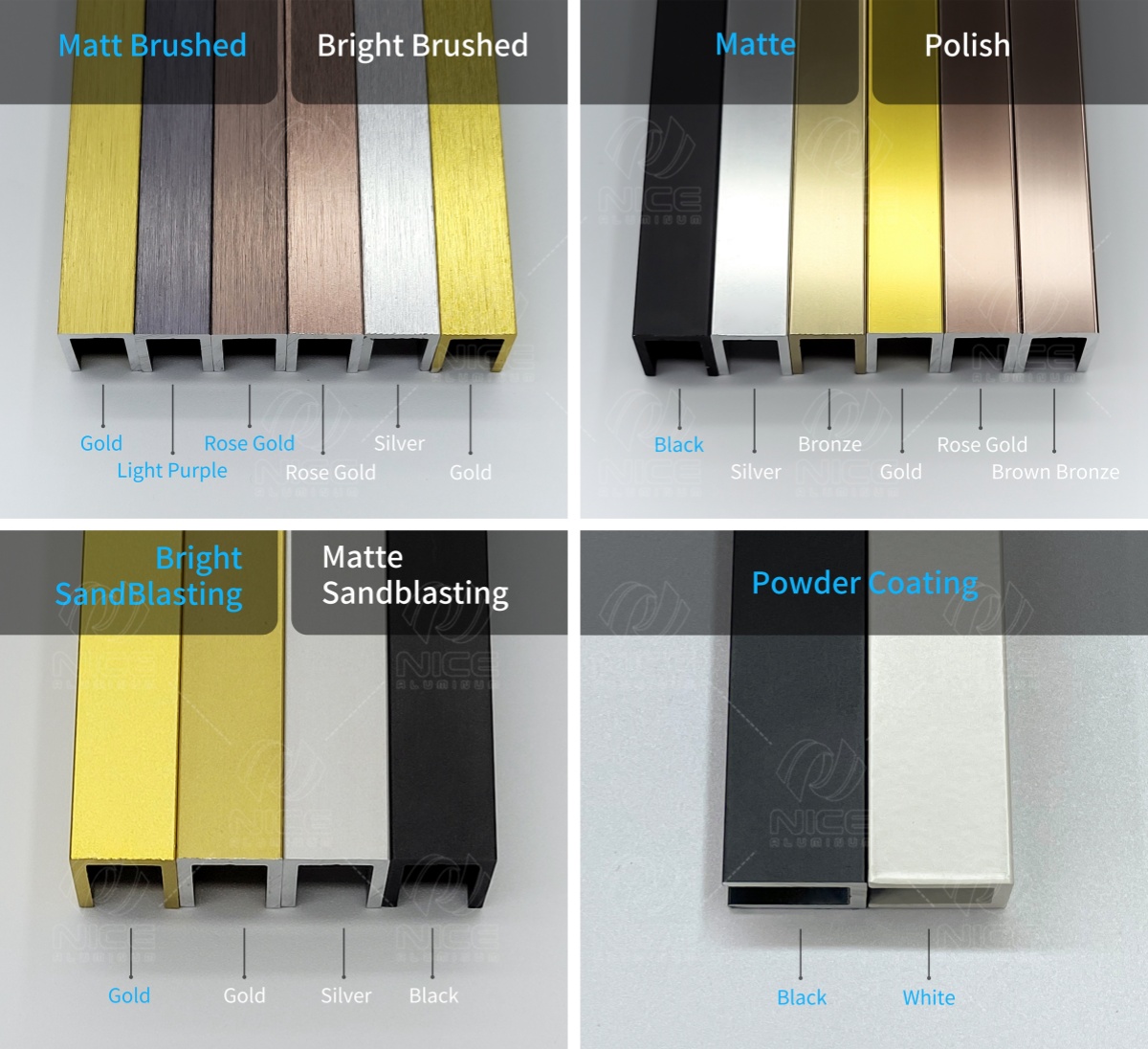
We will cover the most commonly used finishes including aluminum anodizing finish, powder coated aluminum profile, brushed aluminum finish, and sandblasted aluminum profile, along with real-world usage recommendations.
What Is Aluminum Profile Surface Finish?
Aluminum profile surface finish refers to the treatment applied to the surface of extruded aluminum to improve its appearance, corrosion resistance, durability, and tactile quality. Raw aluminum profiles, especially 6063-T5 used in furniture applications, are not suitable for direct use without surface treatment.
From our manufacturing experience, surface finishing serves three core purposes:
-
Enhancing visual appeal (color, texture, gloss)
-
Improving corrosion and wear resistance
-
Meeting specific design and application requirements
Different projects require different finishes. For example, wardrobe doors require aesthetic consistency, while bathroom applications demand high corrosion resistance.
Types of Aluminum Profile Surface Finishes
1. Aluminum Anodizing Finish
An aluminum anodizing finish is an electrochemical process that creates a protective oxide layer on the surface of aluminum. This layer is not a coating but an integral part of the aluminum itself.
In our production, anodizing thickness typically ranges from 8μm to 25μm depending on application requirements.
Advantages:
-
Excellent corrosion resistance
-
High durability and scratch resistance
-
Natural metallic appearance
-
Consistent color finish
Best Applications:
-
Wardrobe aluminum frame profiles
-
Sliding door systems
-
Bathroom aluminum structures
From our experience, anodizing is the most stable and widely used finish for furniture aluminum profiles.
2. Powder Coated Aluminum Profile
A powder coated aluminum profile is created by applying electrostatically charged powder onto the aluminum surface, followed by curing under high temperature.
This process allows for a wide range of colors and textures, making it ideal for modern interior design.
Advantages:
-
Wide color customization (RAL colors)
-
Strong resistance to chipping and peeling
-
Uniform coating thickness
-
Cost-effective for bulk production
Best Applications:
-
Kitchen cabinets
-
Decorative furniture profiles
-
Interior aluminum structures
We often recommend powder coating when customers need color matching with furniture panels.
3. Brushed Aluminum Finish
A brushed aluminum finish is achieved by mechanically polishing the aluminum surface to create fine linear textures. This finish is often combined with anodizing for protection.
Advantages:
-
Premium visual appearance
-
Modern and minimalist aesthetic
-
Reduces visible fingerprints and scratches
Best Applications:
-
High-end wardrobe doors
-
Minimalist cabinet systems
-
Luxury interior design
In our projects, brushed finishes are especially popular in European-style furniture systems.
4. Sandblasted Aluminum Profile
A sandblasted aluminum profile is created by blasting abrasive particles onto the aluminum surface, producing a uniform matte texture.
Advantages:
-
Soft matte appearance
-
Improved surface uniformity
-
Better adhesion for further treatments
Best Applications:
-
Pre-treatment for anodizing
-
Decorative aluminum panels
-
Industrial design applications
We often combine sandblasting with anodizing to achieve a refined matte finish.
Anodized vs Powder Coated Aluminum: Which Is Better?
One of the most common questions we receive is whether anodizing or powder coating is the better choice.
| Feature | Anodizing | Powder Coating |
|---|---|---|
| Durability | Very high | High |
| Appearance | Metallic | Color customizable |
| Corrosion Resistance | Excellent | Good |
| Cost | Medium | Lower |
From our experience:
-
Choose anodizing for durability and premium feel
-
Choose powder coating for color flexibility and cost efficiency
How We Help You Choose the Right Aluminum Surface Finish

With over 20 years of hands-on experience in aluminum extrusion and surface finishing, we don’t just offer standard options—we help our clients make the right decisions based on real production and application requirements. In our daily work with wardrobe manufacturers, cabinet factories, and architectural projects, we evaluate each project by considering usage environment, design expectations, durability needs, and cost targets to recommend the most suitable solution. Whether it is selecting the optimal aluminum anodizing finish for long-term corrosion resistance, choosing a powder coated aluminum profile for precise color matching, or combining brushed aluminum finish with anodizing for a premium look, every recommendation we provide is based on proven manufacturing data and project experience rather than theory.
We also understand that consistency is critical in large-scale production. That’s why we strictly control anodizing thickness, powder coating adhesion, and surface uniformity across batches to ensure stable quality from the first sample to mass production. Our team supports custom color development, surface texture adjustment, and deep processing integration, helping you reduce risk and improve efficiency in your supply chain.
If you are unsure which surface finish is best for your aluminum profiles, you can contact us directly with your drawings, application scenarios, or design references. We will provide tailored recommendations, sample support, and technical guidance to help you move from concept to production with confidence.
Get Custom Aluminum Surface Finished Quote
View Our Full Custom Capabilities
What Color Options Are Available for Aluminum Profile Surface Finishes?
When it comes to color selection, we offer a highly flexible and fully customizable range of options depending on the chosen surface finish. For anodizing, colors are typically limited to natural metallic tones such as silver, champagne, bronze, black, and gold, where the final appearance is influenced by both the alloy composition and anodizing thickness, resulting in a premium and consistent finish widely used in wardrobe and architectural applications. For powder coated aluminum profiles, the possibilities are significantly broader, as we can match almost any RAL color, including matte, glossy, textured, and even special effect coatings, allowing seamless integration with wood panels, glass, or interior design themes. In addition, for brushed aluminum finishes, the color is usually combined with anodizing to achieve both texture and tone, creating modern minimalist aesthetics popular in high-end furniture systems. We also support customized surface treatments such as sandblasted anodized finishes and wood grain transfer coatings, enabling clients to replicate natural materials while maintaining the durability of aluminum. From our manufacturing experience, the key to choosing the right color is not only visual preference but also consistency across batches, resistance to fading, and compatibility with the overall product design, all of which we strictly control during production to ensure stable and repeatable results for large-scale projects.
Best Aluminum Surface Finish for Wardrobe and Furniture Applications
Based on our project experience:
-
Wardrobe doors: anodized or brushed finish
-
Kitchen cabinets: powder coated aluminum profile
-
Bathroom systems: anodized aluminum
-
Luxury interiors: brushed + anodized combination
Choosing the right finish directly impacts both product lifespan and customer satisfaction.

FAQ
Which aluminum finish lasts the longest?
Anodizing provides the longest lifespan due to its integrated oxide layer.
Is anodizing better than powder coating?
It depends on the application. Anodizing is more durable, while powder coating offers more color options.
Can finishes be combined?
Yes, for example brushed + anodized is very common in high-end applications.
What is the most cost-effective finish?
Powder coating is generally the most economical solution for large-scale production.
Conclusion
Understanding aluminum profile surface finishes is essential when selecting the right material for furniture and architectural applications. Whether you choose an aluminum anodizing finish for durability, a powder coated aluminum profile for color flexibility, a brushed aluminum finish for aesthetics, or a sandblasted aluminum profile for texture, each option has its unique advantages.
From our experience, the best results come from aligning surface finish selection with application requirements, design goals, and long-term performance expectations.
If you are looking for customized aluminum profile solutions with precise surface finishing, we are ready to support your project from design to production.
Related Aluminum Profile Solutions You May Be Interested In
To help you better understand how surface finishes connect with real aluminum profile applications, we have listed some related solutions commonly used in furniture and architectural projects. These pages will help you explore how different finishes and profiles work together in real production scenarios.
Aluminum Cabinet Frame Systems
Aluminum U Profile Design Guide
Aluminum Extrusion Tolerance: What ±0.05mm Means for Your Assembly

 Email
Email Whatsapp