
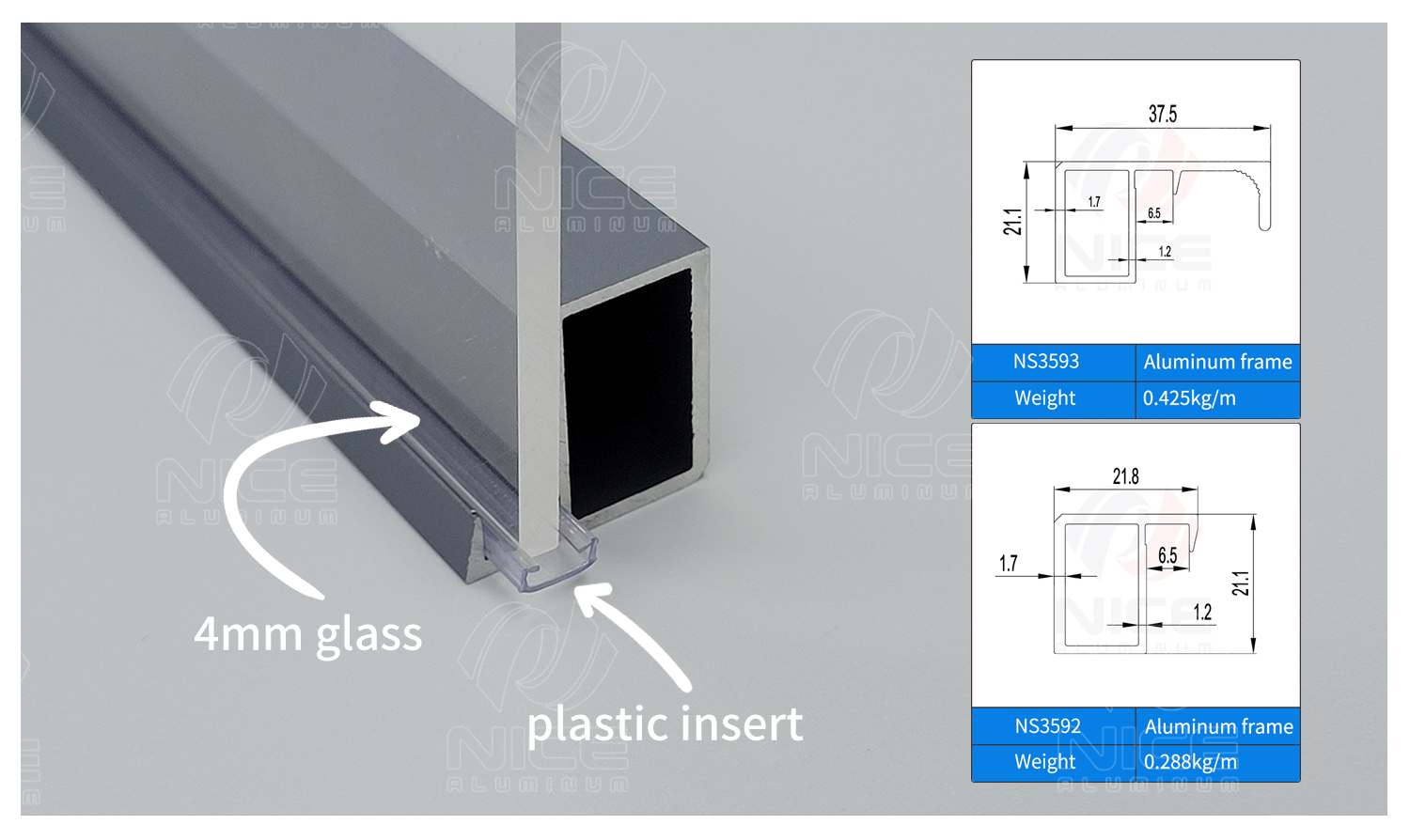
Wall thickness directly controls weight, stiffness, cost, and how much load a profile can carry — so I match thickness to the actual load, not a fixed number.
About the Author
Alistair Leung — Senior Technical Sales Engineer, 13 years in furniture aluminum extrusion.
How do I determine the right wall thickness and load capacity for furniture profiles?
I look at the span, the load it must carry, and the section shape — then choose the lightest wall that still holds safely.
Is thicker wall thickness always better?
No — thicker is not automatically better. It adds weight, material cost, and shipping cost, and beyond a point the profile stops getting meaningfully stiffer for the extra metal. In my work a well-designed section — with ribs or a deeper profile — often beats a thick, solid wall at lower cost and weight. The goal is the right stiffness and strength at the lowest total cost, so I calculate and recommend rather than simply adding thickness.
What wall thickness and section design do you recommend for load-bearing parts (cabinet frames, wardrobe door frames, sliding door rails)?
For a cabinet frame I typically recommend 1.2-1.5 mm walls on square or rectangular sections; for a wardrobe door frame 1.5-2.0 mm with a deeper profile to resist sagging under the panel weight; for a sliding door rail 2.0-3.0 mm on a thick-walled section that carries the full door load and rolling wear. These are starting points — I always confirm the actual span and target load first, then adjust the section, wall, and alloy together so the part is safe without being overbuilt.
How to recommend customers to use the appropriate thickness?
I ask three questions before I recommend: what weight must it carry, how long is the unsupported span, and how is it fixed? From there I match the section, wall, and temper to that duty. I show clients a few thickness options with the cost and weight difference of each, so they can choose between minimum cost and maximum margin of safety. That way the thickness you buy is justified by engineering, not guesswork.
Technical Details
| Furniture part | Suggested wall | Section advice |
|---|---|---|
| Cabinet frames | 1.2-1.5 mm | Square / rectangular |
| Wardrobe door frames | 1.5-2.0 mm | Deep profile |
| Sliding door rails | 2.0-3.0 mm | Thick-walled wear rail |
About Us
We are Guangdong Nice Aluminum Products Co., Ltd. — a furniture aluminum profile factory in Zhaoqing, Guangdong with 13 years, 200 staff, and 2,000 tons monthly output. We engineer wall thickness and sections to your load, and hold ISO 9001, CE, and RoHS. Send me your drawing and load requirement — I will reply within 24 hours.
FAQ
A: Yes — I review your load and span and recommend the right wall free of charge.
A: 6063-T5 by default, 6061-T6 for high structural loads.
A: Yes — down to about 1.2 mm depending on the section.
A: By meter, piece, or weight, with a 300 kg minimum.
A: Samples in 15 days; bulk in 31-45 days.
Author Credentials
Alistair Leung — 13 years in aluminum extrusion for furniture. I have managed 500+ custom dies and 3,000+ export shipments for furniture brands worldwide.

 Email
Email Whatsapp