
Guide : Choose the Right Glass Thickness for Aluminum Cabinet Frames
When we design and manufacture aluminum cabinet frames, choosing the correct glass thickness is critical for both performance and aesthetics. In this guide, we explain how to match glass thickness with aluminum profiles, how weight affects structure, and how to solve fitting issues using rubber gaskets.

What Glass Thickness Is Suitable for Aluminum Cabinet Frames?
In most cabinet applications, the commonly used glass thickness ranges from 4mm to 6mm. The exact choice depends on the groove width of the aluminum profile and the application scenario.
4mm glass – lightweight, suitable for small cabinet doors
5mm glass – balanced choice for most furniture applications
6mm glass – stronger and more stable for large doors
Why Glass Thickness Matters in Aluminum Cabinet Frames
Ensures proper fitting inside the aluminum frame groove
Affects door stability and durability
Impacts overall weight and hinge performance
Improves visual quality and premium feel
Matching Aluminum Frame Groove and Glass Thickness
Different aluminum cabinet profiles are designed with specific groove sizes. We usually recommend:
Groove 4.5mm → suitable for 4mm glass
Groove 5.5mm → suitable for 5mm glass
Groove 6.5mm → suitable for 6mm glass
A precise match ensures easy installation and prevents glass movement inside the frame.
Glass Thickness vs Aluminum Frame Load Capacity
| Glass Thickness | Weight Level | Recommended Application |
|---|---|---|
| 4mm | Light | Small cabinet doors |
| 5mm | Medium | Standard kitchen cabinets |
| 6mm | Heavy | Large wardrobe doors |
From our manufacturing experience, thicker glass increases durability but also adds load. This means hinges, aluminum profiles, and installation must be strong enough to support the weight.
What If Glass Thickness Does Not Match the Frame?
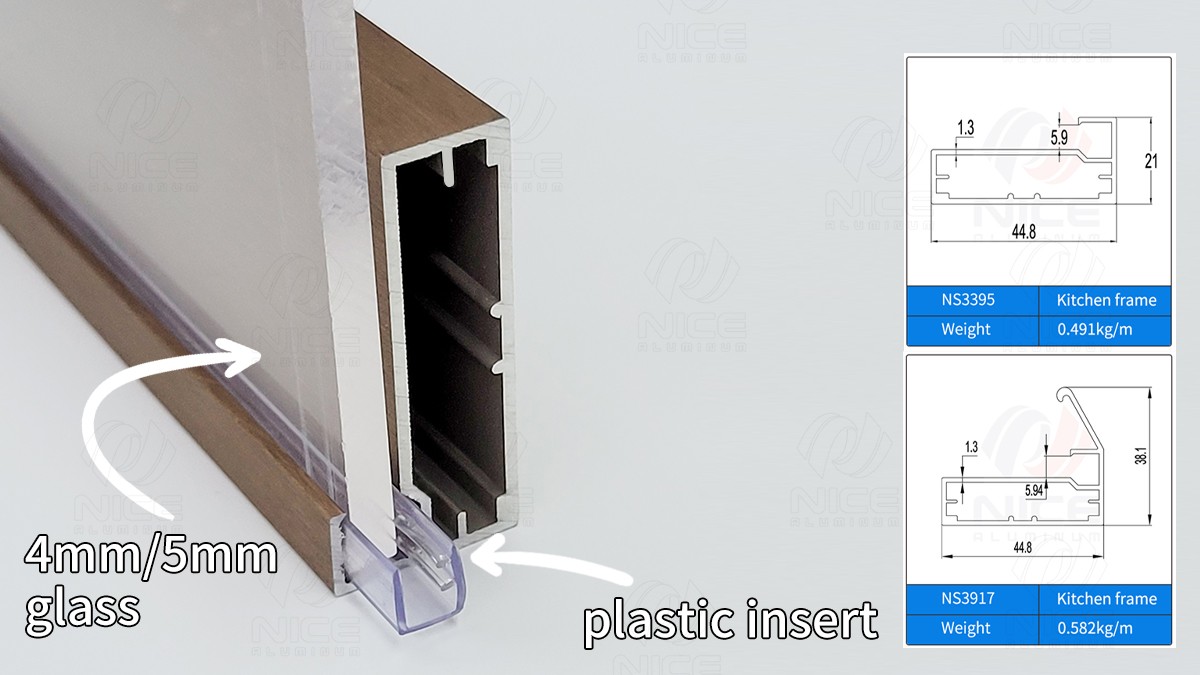
In real projects, glass thickness may not always perfectly match the aluminum groove. In such cases, we use rubber gaskets or sealing strips to adjust the fit.
Use thicker rubber strips to fix thinner glass
Prevent glass shaking or noise
Improve sealing and stability
This is a common and effective solution widely used in cabinet and wardrobe systems.
Types of Rubber Gaskets for Glass Fixing
PVC gasket – cost-effective and flexible
EPDM rubber – better durability and aging resistance
Silicone strip – high-end option with strong sealing performance
Choosing the right gasket depends on the application environment and quality requirements.
Applications of Aluminum Cabinet Frames with Glass
Kitchen cabinet glass doors
Wardrobe aluminum frame doors
Display cabinets
Sliding door systems
Looking for a Custom Aluminum Cabinet Frame Manufacturer?
With over 20 years of experience in aluminum extrusion, we specialize in manufacturing aluminum cabinet frames with precise groove control to perfectly match different glass thicknesses.
Custom aluminum profile design
Accurate tolerance control
Complete solution including rubber gaskets
OEM & ODM support
Get Custom Aluminum Cabinet Frame Quote
View Our Manufacturing Capabilities
FAQ About Glass Thickness for Aluminum Cabinet Frames
Can I use 3mm glass in aluminum cabinet frames?
Yes, but it requires additional rubber gasket to ensure a tight fit and prevent movement.
Is 6mm glass too heavy for cabinet doors?
It depends on the frame strength and hinge quality. For large doors, 6mm glass is recommended with reinforced aluminum profiles.
What is the best glass thickness for kitchen cabinets?
5mm glass is the most commonly used option as it balances strength, weight, and cost.
Related Articles
>Aluminum Extrusion Process Explained<

 Email
Email Whatsapp