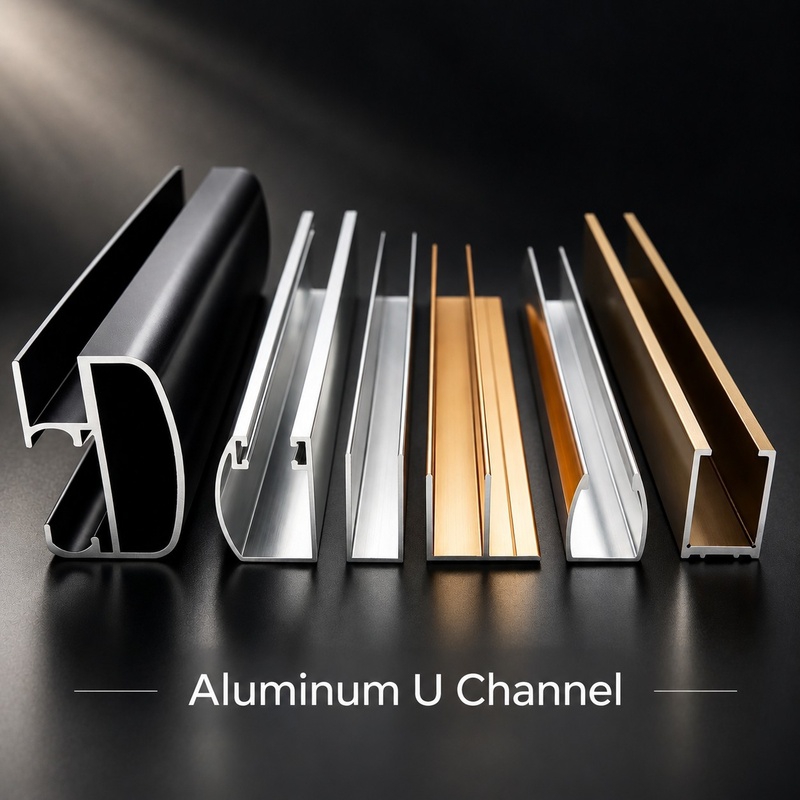
Custom Aluminum Glass Channel Profiles
Direct answer: A custom aluminum glass channel is an extrusion engineered around a specific glass panel, gasket, fixing method and installation space. It is the right choice when a standard channel cannot meet the required groove, edge coverage, mounting detail or visual profile. NICE Aluminum supports the workflow from section review and die development to extrusion, machining and surface finishing.
Customization should solve a measurable assembly problem. Typical objectives include holding a non-standard glass thickness, hiding fasteners, integrating a gasket seat, reducing part count or creating a visible edge that matches the furniture design. The cross-section therefore needs to be designed from the complete assembly rather than from the aluminum part alone.
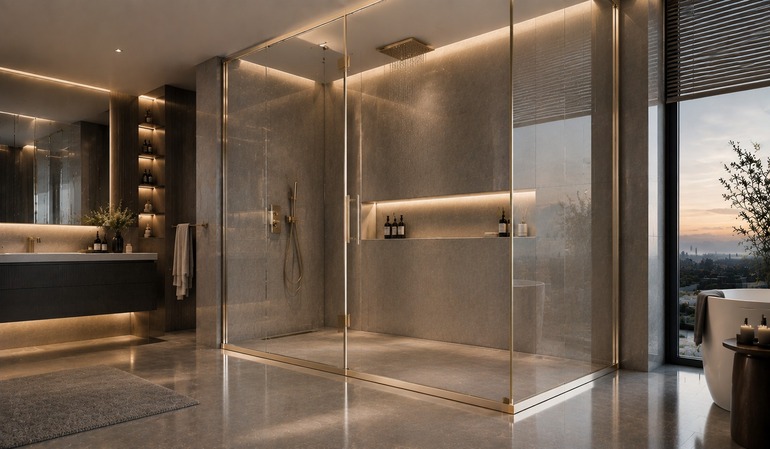
How to select the right specification
| RFQ input | What to provide | Engineering decision |
|---|---|---|
| Glass system | Panel thickness, edge finish and gasket material | Sets the usable groove and fit strategy |
| Installation | Wall, floor, frame or furniture mounting | Defines fixing surfaces and access |
| Section | 2D drawing, sample or marked reference image | Confirms geometry and critical dimensions |
| Finish | Anodized, powder coated, brushed, matte or color reference | Determines visible-surface preparation |
| Post-processing | Cut length, holes, slots, milling or bending | Determines fixtures, tolerances and inspection points |
Design the channel around the glass and gasket
Start with the actual panel stack. A nominal glass size does not include possible gasket compression, adhesive allowance or edge tolerances. Identify which dimensions control retention and which are cosmetic. Critical-to-fit dimensions should be marked on the drawing instead of leaving every dimension at the same priority.
Reduce assembly steps through extrusion design
The Aluminum Extruders Council notes that extrusion can integrate functions and reduce separate forming or welding operations. For a glass channel, this may mean incorporating a fixing ledge, gasket seat, alignment rib or visual trim into one section. The aim is not maximum complexity; it is a stable profile that simplifies fabrication and installation.
Control visible surfaces before tooling
Mark the Class-A visible faces, acceptable extrusion lines and required corner appearance. Surface treatment cannot hide every geometry issue. Uniform wall transitions and practical corner radii generally improve extrusion stability, while decorative grooves can help identify orientation during assembly.
Validate before mass production
Use the approved drawing as the technical baseline. Confirm the sample against glass fit, gasket retention, assembly access, finish appearance and cut quality. NICE Aluminum can coordinate die making, trial extrusion, sample confirmation and production after the critical dimensions are agreed.
Frequently asked questions
When should I choose a custom glass channel?
Choose customization when the project has a non-standard glass stack, hidden fixing requirement, integrated gasket, special visible edge or installation constraint that a stock channel cannot meet.
Can NICE Aluminum work from a sample?
Yes. A sample or reference profile can start the discussion, but a dimensioned drawing is recommended before tooling and production approval.
Can machining be included?
Yes. Cutting, drilling and CNC milling can be included when defined in the drawing and quotation.
How is the surface finish selected?
Select the finish by appearance, environment and maintenance needs. Anodizing and powder coating are common choices; visible faces and color requirements should be identified before production.
What is the best way to avoid fit problems?
Approve the glass, gasket and profile as one assembly. A physical sample test is more reliable than approving the aluminum section without the mating components.
Related product resources
Technical references
The following external references explain extrusion design, aluminum alloys, surface finishing and quality-management principles. Product-specific requirements remain subject to the approved NICE Aluminum drawing and order specification.
Send your drawing for an engineering review
Include the application, section drawing or sample, critical dimensions, finish, finished length, quantity, machining and packing requirements. NICE Aluminum will review the profile and prepare the next-step quotation or sampling plan.


 Email
Email Whatsapp