Aluminum Wardrobe Door Frame Systems
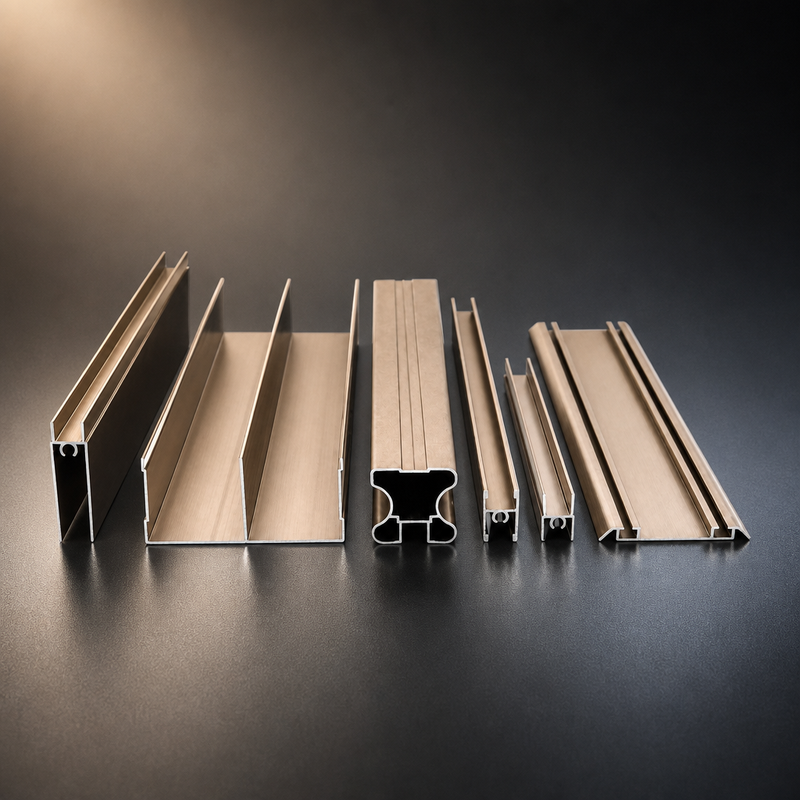
Direct answer: An aluminum wardrobe door frame is a set of extruded rails that forms the perimeter and functional structure of a wardrobe door. Depending on the design, it can hold glass or a decorative panel, connect to hinges or sliding hardware and incorporate a handle detail. NICE Aluminum supplies 20mm, 45mm and custom frame directions for modern wardrobe systems.
A wardrobe door frame is a system rather than a single generic profile. Vertical stiles, horizontal rails, panel grooves, corner connectors, gaskets and hardware must work together. The correct page content should show how these parts relate and which models perform each role.
How to select the right specification
| Door-system factor | Hinged wardrobe door | Sliding wardrobe door |
|---|---|---|
| Primary hardware | Hinges and opening clearance | Track, rollers and overlap |
| Frame priority | Squareness, hinge fixing and handle position | Weight distribution, alignment and smooth travel |
| Panel interface | Glass/panel groove and gasket | Panel retention plus movement control |
| Rail coordination | Four-side frame and corner joints | Stiles, rails and track relationship |
| RFQ drawing | Door elevation, section and hinge details | Door elevation, frame sections, track and roller details |
Define the door movement first
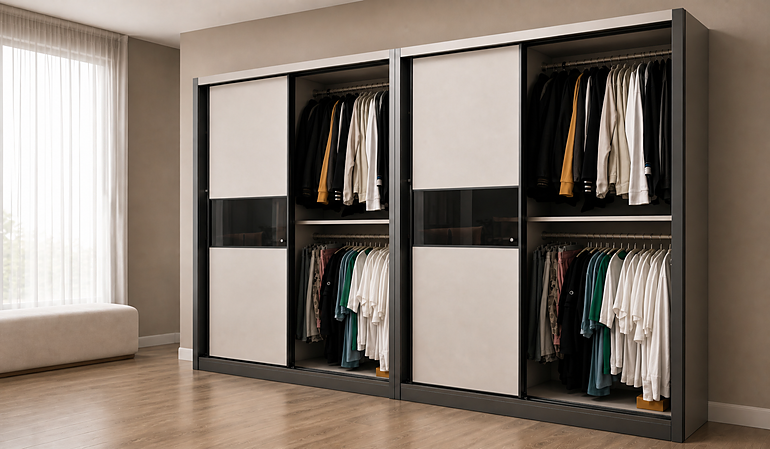
State whether the door is hinged, sliding or part of another opening system. The same visual frame cannot be assumed to work with every hardware type. Door size, panel choice and movement define the section, machining and accessory requirements.
Choose between slim, wide and custom frames
A 20mm slim frame creates a narrow visual border. A 45mm frame provides a broader rail and potentially more section space for joints or hardware. A custom frame is appropriate when neither series fits the panel, hardware or design language. Select by the finished door system, not by width alone.
Coordinate panel, gasket and corner assembly
Confirm panel thickness, groove, gasket and insertion sequence. Approve a complete corner because cut quality, connector geometry and finish alignment affect both appearance and squareness. For glass doors, avoid treating the glass and extrusion as separate purchases without an assembly check.
Publish each component's role
A useful wardrobe-system page should identify stiles, top/bottom rails, handles, tracks and accessories. Individual SKU pages should state the component role and compatible system. This is more helpful than repeating the same factory paragraph across every model.
Frequently asked questions
Which frame width should I choose for a wardrobe door?
Use 20mm for a deliberately slim border and consider 45mm when the design requires a wider rail or more section space. Confirm the exact model against the door assembly.
Can the frame hold glass or solid panels?
Frame compatibility depends on the profile groove and gasket. Provide the panel thickness and material for confirmation.
Are hinged and sliding frames interchangeable?
Not by default. Hinges, tracks, rollers, overlaps and machining requirements differ.
Can the wardrobe frame finish be customized?
Current NICE Aluminum pages list anodizing, powder coating, wood grain and electrophoresis among customizable finish directions.
What should a complete RFQ contain?
Include door dimensions, opening method, panel, hardware, frame sections, finish, quantity, machining, accessories and packing.
Related product resources
Technical references
The following external references explain extrusion design, aluminum alloys, surface finishing and quality-management principles. Product-specific requirements remain subject to the approved NICE Aluminum drawing and order specification.
Send your drawing for an engineering review
Include the application, section drawing or sample, critical dimensions, finish, finished length, quantity, machining and packing requirements. NICE Aluminum will review the profile and prepare the next-step quotation or sampling plan.


 Email
Email Whatsapp